• Skip to primary navigation
  • Skip to main content
  • Skip to primary sidebar
  • Butterflies
  • Gardening
  • Kids Nature Activities
  • Printables
  • About
    • Disclosure

Rooted Wings Co

menu icon
go to homepage
  • Butterflies
  • Gardening
  • Kids activities
  • Printables
subscribe
search icon
Homepage link
  • Butterflies
  • Gardening
  • Kids activities
  • Printables
×

How to Take Care of Moth Caterpillars

08/05/2023

Did you find a random caterpillar while outside? It can be fun to bring it in and see what it turns into after metamorphosis. Here are a few tips for how to take care of moth caterpillars to increase the chances of survival for your new pet.

How to take care of moth caterpillars

Finding moth caterpillars outside is super common, especially since each species usually has many host plants it can eat, unlike many butterfly species that only eat a few specific host plants as caterpillars.

Caterpillars are fairly easy to take care of, however there are some things you need to know to increase their chances of survival.

Join our newsletter!

Stay up to date with all things Rooted Wings Co! 

Thank you!

You have successfully joined our subscriber list.

What do moth caterpillars eat?

While moth caterpillars may have many host plants - plants they prefer to eat in the larval stage - they most likely can't eat just anything.

How to take care of moth caterpillars

I remember finding caterpillars as a kid and putting them in a jar with grass and random plants. However, it's highly unlikely your new caterpillar eats grass. Most caterpillars eat leaves from specific trees or broadleaf weeds.

If you find the moth caterpillar on a plant, there's a good chance that plant is one of its preferred host plants. Especially if you can see small holes where the caterpillar has been eating.

We recently found this caterpillar on a milkweed plant while checking for monarch caterpillars. It was clear it had been eating the milkweed so that's what I kept feeding it.

You can also attempt to identify the caterpillar you've found to determine which plants it will eat.

How to identify what kind of caterpillar you found

Identifying moth caterpillars can be a bit more difficult than identifying other bugs. Most of them look similar and there are so many different species of moths.

However there are a couple different methods you can try to help you get as close as possible.

Identify bugs with your iphone photo app.

Take a photo of your caterpillar.

Inside the photos app, open the photo and tap the information icon at the bottom of your screen.

Select look up- bug.

how to identify caterpillars

Siri knowledge will provide a couple wikipedia articles that most similarly match the photo you took. Neither of these are the correct results for my caterpillar though.

Use picture insect app to identify your caterpillar.

Download the Picture Insect App from the app store.

Take a photo of your caterpillar or select a photo from your library.

Tap the check mark to identify the insect.

how to identify caterpillars

Picture Insect will give you a lot of information about your insect including a description, answers to commonly asked questions, and typically it will include information about the food it eats.

You can also just google "host plant for [moth caterpillar]" once you have identified the species.

Unfortunately, both of these identification methods are typically inaccurate in the larval stage which I assume is due to the amount of similar looking caterpillars. However, you can browse the similar images that show up to see if your caterpillar actually looks like the others pictured.

If the results are wrong, it's usually pretty apparent. Take a photo from another angle or try to get a clearer picture and analyze it again until you find a result that seems plausible.

This echo tiger moth caterpillar is close, but not exactly the same as the one we had. Mine didn't have stripes, but they did have similar diets.

Learn how to care for your moth caterpillar

How to take care of moth caterpillars

I ultimately determined our caterpillar might be a salt marsh tiger moth and verified that milkweed was one of its host plants.

I also learned it will wrap itself in leaves and create a cocoon using silk and its own hair before emerging a couple weeks later as a moth.

We kept it in a small tupperware container with air holes poked in the top, and the caterpillar ate for a couple days before creating its cocoon as expected.

How to take care of moth caterpillars: Dogbane tiger moth cocoon

Wait for your moth caterpillar to emerge from its cocoon

After a couple weeks, our moth finally emerged. We just left it in the tupperware container, checking in on it every day or so.

How to take care of moth caterpillars

When it finally emerged, it didn't look exactly like the salt marsh tiger moth I expected. The salt marsh species has black spots. So I took another photo and uploaded it to Picture Insect, which it correctly identified as a dogbane tiger moth.

Even though the original identification was a little off, we figured out it was a species of tiger moth and ate milkweed, so it was still helpful in determining how to care for it. Dogbane makes sense since milkweed is a species of dogbane!

I hope these types for how to care for moth caterpillars were helpful! Overall, my kids and I had such a fun experience bringing in a new species of caterpillar, observing its lifecycle, and identifying and releasing a new moth!

Free Moth Coloring Pages

06/28/2023

These free moth coloring pages are super simple to print off and color!

Download these coloring sheets to entertain your littles while they learn about different species of moths!

Join our newsletter!

Stay up to date with all things Rooted Wings Co! 

Thank you!

You have successfully joined our subscriber list.

Free printable moth coloring sheets:

free sphinx moth coloring page

Each coloring page features a different species of moth with an interesting pattern perfect for coloring fun for all ages!

free rothschildia aurota moth color page

Color with your kids on a rainy day while learning about these 10 moth species. Want to take it a step further? Learn more fun facts about 20 beautiful moth species, including the 10 moths on this list!

free luna moth coloring page

There are ten unique free moth coloring pages included to keep your kids busy while they learn! You can easily save and print off your favorites by right clicking each image and choosing "save." Or you can use the form at the bottom of this post to download all ten images at one time.

free lime hawk moth coloring page

The ten moth species included in these free coloring pages are:

  • Atlas Moth
  • Cecrophia Moth
  • Emperor Moth
  • Garden Tiger Moth
  • Hercules Moth
  • Io Moth
  • Lime Hawk Moth
  • Luna Moth
  • Rothschildia Aurota Moth
  • Sphinx Moth
free io moth coloring page

These free printable coloring sheets are for personal use only - which means you can print them out and use them for yourself, your friends, anyone in your personal circle. But selling, altering or reproducing of these printables is not allowed.

free hercules moth coloring page

I just love how unique each moth is! Nature is pretty amazing, isn't it?

free garden tiger moth coloring page

Some of these moths are only found on other continents, but a few of them like the luna moth, io moth, garden tiger moth and cecropia moth all can be found in North America. How cool would it be to find one in real life? Now you'll know what to look for!

free emperor moth coloring page
free cecropia moth coloring page
free atlas moth coloring page

I've also included this moth guide so you can see how each moth is typically colored in case you wanted to go with realistic colors!

moth guide for free moth coloring pages

Download the FREE Moth Coloring Pages

Thank you!

Check your email for your free download!

Looking for more coloring page designs?

I've created 100 unique butterfly coloring pages perfect for keeping your kiddos busy! You can purchase the entire bundle for just $4.99.

You and your littles can learn about the life cycle of butterflies and color a variety of nature-focused scenes with butterflies.

You'll get one PDF file with 100 pages so you can easily print out your favorites as you're ready to color them!

How Do Butterflies Find Host Plants?

06/27/2023

Plant it and they will come! Attracting butterflies is as easy as planting nectar plants and host plants in your garden that butterflies love. But have you ever wondered, "How do butterflies find host plants?"

Ever wondered, "How do butterflies find host plants?" Learn the strategies and mechanisms that drive a butterfly's instincts.

It's an interesting question because unlike nectar plants, butterflies must find specific host plants to lay their eggs on. The caterpillars of each species will only survive on certain plants.

For example, monarch caterpillars only eat milkweed plants.

Other species like black swallowtail caterpillars can survive on several different host plants, mainly those in the carrot family like parsley, fennel, dill and rue.

So how do butterflies know which plants to lay their eggs on as they flutter around? Simply put, it's instinct.

How do butterflies find host plants?

Here's an overview of the strategies butterflies use to find host plants:

Butterflies find host plants by using visual cues.

Learn how butterflies find host plants to lay their eggs on

Butterflies actually have great eyesight! This plays a crucial role in their search for host plants.

They are attracted to specific colors and patterns, which guide them towards suitable plant species.

Butterflies can perceive a broad spectrum of colors, including ultraviolet light, which is invisible to humans.

This allows them to spot subtle variations and patterns on leaves and flowers.

Certain species are particularly attracted to bright, vibrant colors, while others may prefer more muted or pastel shades.

By honing in on these visual cues, butterflies can identify potential host plants from a distance, guiding them closer to their target.

They use their olfactory senses.

Butterfly on thistle host plant

Butterflies also rely on their olfactory senses to locate host plants. Olfactory senses is a fancy way of saying they use their sense of smell.

However, butterfly senses work a little differently than you might expect.

They possess special receptors on their antennae that detect the chemical signals emitted by specific plants.

These chemical signals, known as volatile organic compounds (VOCs), act as aromatic cues. Each plant species emits a unique blend of VOCs that serves as a "scent signature."

Female butterflies, in particular, utilize their acute sense of smell to find suitable plants for egg-laying.

They can detect the presence of specific host plants from a distance, enabling them to navigate towards the right vegetation.

Essentially, female butterflies use their antennae to smell out the right host plants.

Butterflies find host plants using taste and touch.

You might also be surprised to learn that butterflies have taste receptors on their legs. This lets them sample the chemical composition of leaves and stems.

Zebra swallowtail butterfly laying eggs on pawpaw tree

This taste testing is another strategy to help butterflies determine if a plant is suitable for egg-laying or nectar feeding.

After their sense of smell brings them to the right area, female butterflies may use their legs to "taste" potential host plants before deciding to lay eggs on them.

By assessing the chemical cues through contact, they can determine if the plant contains the necessary nutrients and defensive compounds required by their caterpillars.

Swallowtail caterpillar on paw paw tree leaf

Butterflies have excellent memories and are capable of learning.

Butterflies exhibit remarkable memory and learning capabilities, which contribute to their ability to find host plants.

Once they have successfully located and laid eggs on suitable host plants, they remember the associated visual and olfactory cues.

Monarch butterfly on milkweed host plant

Butterflies can remember the specific plants that catered to their needs and the locations where they found them.

Additionally, they can learn and adapt their preferences based on experiences and interactions with different plant species.

Through a process of trial and error, butterflies learn which host plants best support the survival and development of their offspring.

How cool is that? Butterflies use all their senses to instinctively find host plants to lay their eggs on that will support them through the larva stages!

Learn something new from this article? Pin it to Pinterest!

Ever wondered, "How do butterflies find host plants?" Learn the strategies and mechanisms that drive a butterfly's instincts.

How to Find Butterfly Eggs

06/26/2023

Finding butterfly eggs can be an exciting and rewarding experience, especially if you choose to bring them inside to raise the caterpillars. In the wild, caterpillars only have a 2-10% survival rate, so bringing them inside may help butterfly conservation efforts.

It's also a really fun way to give your family a front row seat to the fascinating metamorphosis and life cycle of butterflies!

How to find butterfly eggs

Here are some steps to help you locate butterfly eggs. We'll walk through each step with examples of the monarch butterfly:

Research Butterfly Species:

Start by researching the specific butterfly species you're interested in finding eggs for.

Monarch caterpillar on milkweed plant.

Different butterfly species lay their eggs on different host plants, so understanding their preferences will guide your search. Learn about their preferred habitats, seasons, and host plant species.

Monarchs live all throughout North America, frequently the northern states and Canada as the summer approaches. In the fall, they migrate to California and Mexico until the weather warms up again the following year.

Identify Host Plants:

Once you know the butterfly species you're targeting, identify the host plants they rely on for egg-laying.

Butterflies are selective about the plants they choose, as their caterpillars need specific leaves for food. Research the host plants and become familiar with their characteristics to aid in your search.

Monarchs only lay eggs on milkweed. There are several different types of milkweed in North America, and it's possible to find monarch eggs on all of them, but you won't find them on any other species of plant.

Common milkweed is very common here in Missouri. You can find it on the side of the road nearly anywhere rural-ish during the summer. This is how we originally got into raising butterflies before planting our own milkweed.

Learn more about growing and caring for milkweed.

Observe Adult Butterflies:

Spend time observing adult butterflies in your garden, local parks, or butterfly habitats. Look for butterflies fluttering around or landing on specific plants. By closely monitoring their behavior, you may be able to witness females laying eggs.

When you see monarch butterflies fluttering around your garden and your milkweed, that's a good sign that soon you'll be able to find eggs!

Inspect Leaves and Stems:

Carefully examine the leaves and stems of host plants, especially the undersides, as many butterflies prefer to lay their eggs there for protection. Look for tiny, round or oval-shaped structures that resemble miniature pearls. These are the butterfly eggs.

Monarch eggs are typically on the underside of the leaves and are off-white, oval shaped with visible ridges. Sometimes it's tricky to tell the difference between a sap ball and an egg, but sap balls tend to be perfectly round and you won't find the ridges on close inspection.

Use a Magnifying Glass:

Eggs can be extremely small and well-camouflaged, so a magnifying glass can be helpful in your search. It allows you to inspect plants more closely and spot eggs that may otherwise go unnoticed.

It's also fun to see the difference in the egg stages. As the caterpillar is about to hatch from its egg, the egg will get darker. Newly hatched caterpillars are tiny, so a magnifying glass can also be helpful in observing them the first few days!

Be Patient and Persistent:

Finding butterfly eggs can take time and patience. It requires careful observation and regular visits to potential egg-laying sites.

Remember that butterflies have specific flight periods and may lay eggs during certain times of the year. Persistence increases your chances of discovering their eggs.

We are diligent about checking our milkweed plants for monarchs eggs daily. We call it going on a "egg hunt" and the kids love it!

Document and Protect:

Once you find butterfly eggs, document your findings with photographs or notes. Take care not to disturb or damage the eggs, as they are fragile.

If you aren't taking them inside to raise them, avoid touching them, and if you need to move closer for a better look, use a soft brush or twig instead of your fingers.

If you are interested in learning how to raise the caterpillars through the metamorphosis process, you can learn about that here.

What if I find a caterpillar on a host plant?

During your egg search, you might also find caterpillars that have already hatched. You can also bring those inside to raise, but there are a couple things to consider.

First, be sure you have access to enough of the host plant to keep them fed until they pupate into a chysalis. Monarch caterpillars eat A LOT during the last few days.

Also be sure to keep these caterpillars quarantined from other caterpillars you may already be raising inside. It's fairly common for caterpillars to be the target of parasitic fly and wasp larva, and you'd never know by looking at them. You often won't know this until the adult fly/wasps hatch from the chrysalis instead of a butterfly.

They may also have been exposed to other bacterial infections common to caterpillars.

If you choose to bring in caterpillars, especially bigger caterpillars, just understand their survival rates are lower than ones brought in during the egg stage, and they should be kept separate from other caterpillars, even in the pupa stage.

If you found this information about how to find butterfly eggs useful, pin it to Pinterest!

FAQs about butterflies

06/26/2023

Here are answers to some of the most frequently asked questions about butterflies and their life cycles. Have you ever wondered what butterflies actually eat or which colors they see while looking for flowers to land on? Keep reading to learn the answers to those questions and several other FAQS about butterflies.

What do butterflies eat?

What do butterflies eat? Learn how to attract butterflies by planting their favorite food sources from caterpillars to butterflies!

Butterflies primarily feed on nectar, which is the sweet liquid produced by flowers. Nectar provides butterflies with the energy they need for flying and other activities. However, the specific diet of a butterfly can vary depending on its species and life stage. Here's a breakdown:

  1. Adult Butterflies: The main food source for adult butterflies is nectar. They have a long, tubular feeding organ called a proboscis, which they use to extract nectar from flowers.

    Butterflies are attracted to brightly colored, fragrant flowers that are rich in nectar. Some common nectar plants for butterflies include milkweed, coneflowers, zinnias, butterfly bush, and lantana.
  2. Caterpillars: During their larval stage, butterflies are known as caterpillars. Caterpillars have different feeding preferences based on their species, and each species typically feeds on specific host plants.

    Host plants are specific plant species that caterpillars rely on for food and sometimes shelter. For example, monarch butterfly caterpillars feed exclusively on milkweed plants. Swallowtail butterfly caterpillars may feed on plants such as parsley, dill, or citrus trees.

Learn more about the feeding habits of butterflies.

How long do butterflies live?

Tiger swallowtail on flowering plant. How long do butterflies live?

Unfortunately most butterflies don't live very long. The lifespan of an adult butterfly is typically somewhere between a few days and a few weeks. However this can very greatly by species. Some butterflies, like the Brimstone (Gonepteryx rhamni) and the Small Tortoiseshell (Aglais urticae) can live for months, sometimes surviving through the entire winter.

What is the life cycle of a butterfly?

The life cycle of a butterfly, known as metamorphosis, is made up of four distinct stages: egg, larva (caterpillar), pupa (chrysalis), and adult. Here's an overview of each stage:

  1. Egg: The life cycle begins when a female butterfly lays eggs on or near host plants for that specific species. The eggs are usually small, round, or oval-shaped. Also depending on the species, they may be laid on the top or bottom of the leaf. Typically the egg hatches within a few days or a week.
  2. Larva (Caterpillar): Once the egg hatches, the larval stage begins. The primary goal of the caterpillar stage is to feed and grow. A caterpillar grows through 5 stages, called instars. The caterpillar molts several times, shedding its outer skin to accommodate its growing body. Each time it sheds its skin, it enters a new instar.
  3. Pupa (Chrysalis): When the caterpillar has reached its full size, it pupates into its chrysalis, also called a pupa. The caterpillar attaches itself to a surface, such as a leaf or twig, and sheds its skin one final time and forms a protective casing around its body. Inside the chrysalis, the caterpillar's body breaks down and rearranges itself, until it ecloses (the technical term for hatching from the chrysalis) as a butterfly.
  4. Adult: The newly emerged butterfly has crumpled wings, and its body is filled with fluid. As it hangs or rests, its wings gradually expand and harden. The fluid is pumped from the abdomen to the wings to help them expand. Once the wings are fully developed and dry, the butterfly is ready to begin its adult life. The primary focus of the adult stage is reproduction and finding food, such as nectar from flowers. Adult butterflies will mate, lay eggs, and continue the life cycle.

The timeline of the life cycle of butterflies varies greatly by species. Many butterflies complete their entire lifecycle in 4-8 weeks, but others may take longer to hatch from eggs or spend more time in the chrysalis.

How do butterflies mate?

Butterflies mate through a process that involves courtship, mating, and fertilization.

Courtship: Male butterflies attract females through elaborate courtship rituals including wing movements, flights, pheromone release, and visual displays. The purpose of these displays is to signal the male's presence, health, and readiness to mate.

Mating: Once a male butterfly successfully attracts a female, they come together to mate. Butterflies typically mate while perched on a plant or any suitable surface, not while flying. During mating, the male butterfly positions himself on top of the female, aligning their abdomens.

Copulation: The actual act of mating is called copulation. Male butterflies have specialized claspers at the end of their abdomen, which they use to hold onto the female during mating.

Sperm Transfer: During copulation, the male transfers sperm to the female. In butterflies, the sperm is stored by the female for later use in fertilizing eggs. Mating durations can vary among species, ranging from a few seconds to several hours.

Post-Mating Behaviors: After mating, the male butterfly may continue to stay with the female for a short period, ensuring that no other males can mate with her during this critical time. This behavior, known as mate guarding, helps increase the chances of the male's sperm successfully fertilizing the female's eggs.

What is the difference between a butterfly and a moth?

There are several differences that can help you differentiate between a butterfly and a moth. One of the easiest ways to tell is to observe their wing position. When at rest, butterflies typically hold their wings together above their bodies while moths hold their wings flat at their sides.

Learn more about the differences between butterflies and moths.

What are some common butterfly species?

Common butterfly species in the United States

There are estimated to be 750-800 species of butterflies in the United States alone, so "common" butterflies species may vary based on location and local plant life. But here are a few species that most butterfly enthusiasts will recognize.

  • Monarch
  • Eastern Tiger Swallowtail
  • Cabbage White
  • Painted Lady
  • Eastern Black Swallowtail
  • Red Admiral
  • Silver-Spotted Skipper
  • Clouded Sulphur

Learn more about these each of these common butterflies.

Where do butterflies live?

Butterflies can be found in most areas around the world and are extremely common around the United States. Different locations are home to different species of butterflies based on their habitat preferences. Here are some common types of habitats where butterflies are often found:

  1. Gardens and Parks: Butterflies are frequent visitors to gardens, parks, and other green spaces. These areas often provide abundant nectar-rich flowers for feeding and suitable host plants for breeding. You can create your own butterfly-friendly garden by researching the butterflies in your area and planting their preferred host plants along with a variety of flowering plants native to your area.
  2. Meadows and Fields: Open meadows and fields are prime habitats for many butterfly species. These expansive areas provide enough space for flying and offer a diverse range of wildflowers that serve as nectar sources for adult butterflies. Meadows also typically host specific host plants that caterpillars feed on.
  3. Woodlands and Forests: Many butterfly species prefer full sun plants, but some butterfly species thrive in wooded areas and forests. Butterflies that prefer these habitats may rely on specific tree species as host plants for their caterpillars. They often inhabit the edges of forests, where there is a mix of sunlight and shade, allowing for a variety of plant species to grow.
  4. Wetlands and Marshes: Certain butterfly species are adapted to wetland environments, such as marshes, swamps, and pond edges. These areas provide unique habitats with specialized plant species that act as host plants and nectar sources. Wetlands support a diverse range of butterfly species with their rich vegetation.
  5. Coastal Areas: Coastal regions can be home to specific butterfly species that have adapted to live in these unique environments. Salt-tolerant plants and coastal dunes provide suitable shelter for certain butterflies, while nearby flowering plants attract them for nectar feeding.

The specific butterfly species you'll find in each habitat can vary based on the location, climate, and local ecological factors. Creating diverse habitats with a variety of native plants and providing food sources throughout the butterfly season can help attract and support butterflies in your area.

What colors can butterflies see?

Butterflies have fascinating visual systems that allow them to perceive a wide range of colors. Butterflies can even see more colors than humans can!

Ultraviolet Vision: Butterflies have UV-sensitive receptors in their eyes, which enable them to detect ultraviolet light. Many flowers have patterns or markings that are invisible to humans help butterflies find nectar sources and identify suitable flowers for feeding.

Broad Color Perception: Butterflies can see a wide spectrum of colors, including red, green, blue, and various shades in between. They can distinguish subtle color variations, which helps them identify specific flowers, mates, and even potential predators.

Color Preferences: Different butterfly species may have specific color preferences when it comes to selecting nectar sources or host plants for egg-laying. For example, some butterflies are attracted to bright, vibrant colors, while others may prefer more subdued or pastel shades.

Patterns and Contrasts: Butterflies are particularly sensitive to patterns and contrasts. They can perceive color variations and patterns on flowers, leaves, and other. These patterns often serve as visual cues for mating, identifying territory, and recognizing specific plant species.

Camouflage and Mimicry: Butterflies also rely on their color vision for survival strategies like camouflage and mimicry. Some butterfly species have evolved to resemble toxic or distasteful species, using vibrant colors as warning signals to potential predators.

A butterfly's ability to see a broad spectrum of colors, including ultraviolet light, plays a crucial role in its survival, reproduction, and interactions with its environment.

How do you attract butterflies to your garden?

Simply put - you attract butterflies to your garden by planting nectar plants and host plants - the specific plants butterflies lay their eggs on that caterpillars can eat. Host plants vary for each species of butterfly. Some butterfly species can feed on multiple types of plants, and some - like monarchs - will exclusively eat one type of plant.

Butterflies will instinctively find their host plants to lay eggs, and are attracted to vibrant nectar flowers as a food source. Providing both of these things in your garden will attract and benefit all types of pollinators, including butterflies!

Learn how to create a container butterfly garden to attract more butterflies to your yard!

How do butterflies fly?

Butterflies fly through a combination of flapping their wings and gliding. The process of butterfly flight involves several key factors that work together to help them get from place to place. This includes wing shape and movement, scales and flexibility and flight muscles combined with gliding. Learn more about how butterflies fly.

Unlike birds or insects like bees, which have direct muscle attachment to their wings, butterflies rely on the flexibility and unique structure of their wings to achieve flight. Learn more about how butterflies fly.

Did you learn something new from these 10 FAQs about butterflies? Pin it to pinterest!

How Do Butterflies Fly?

06/25/2023

Ever wondered how butterflies fly? It's pretty cool to see them fluttering through the air, but it's hard to tell exactly how they manage to fly. We're going to break it down for you here!

Painted lady butterfly on pink plant. Learn how butterflies fly!

Butterflies fly through a combination of flapping their wings and gliding. The process of butterfly flight involves several key factors:

  1. Wing Shape: Butterfly wings are broad and flat, with a delicate and lightweight structure. This shape allows them to generate lift and stay airborne.
  2. Wing Flapping: Butterflies have strong muscles attached to their wings, which they use to flap their wings up and down in a figure 8 pattern. This motion creates the necessary thrust to propel themselves forward and upward.
  3. Wing Scales: Butterfly wings are covered in tiny, overlapping scales that help provide rigidity and strength. These scales also contribute to the vibrant colors and patterns seen on butterfly wings.

    They're also how butterflies get their scientific name - Lepidoptera, which means scale wing in Greek.
  4. Wing Flexibility: Butterfly wings are flexible and capable of adjusting their shape during flight. This flexibility allows butterflies to maneuver and change direction quickly.
  5. Flight Muscles: Butterflies have well-developed flight muscles, known as the thorax muscles, that control the movement of their wings. These muscles contract and relax rapidly, enabling the wings to beat at a high frequency.
  6. Gliding: Along with flapping their wings, butterflies also glide through the air. By spreading their wings and using air currents, they can maintain flight with minimal wing flapping, conserving energy during long flights.
  7. Wing Beat Frequency: The frequency at which butterflies flap their wings varies among species but generally ranges from 5 to 12 beats per second. Smaller butterflies tend to have higher wing beat frequencies compared to larger species.

    The butterfly with the fastest wingbeat is the smidge at 62,760 beats per minute and the slowest is the swallowtail butterfly at just 300 beats per minute, according to the Smithsonian Institute.

Unlike birds or insects like bees, which have direct muscle attachment to their wings, butterflies rely on the flexibility and unique structure of their wings to achieve flight. Next time you see a butterfly fluttering around outside, you'll have a better understanding of how they're using their wings and body to get around!

Free Butterfly Life Cycle Coloring Pages

06/11/2023

These free butterfly life cycle coloring pages are super simple to print off and color!

Download these coloring sheets to entertain your littles while they learn about the life cycle of butterflies!

These free butterfly coloring pages are simple to print off! Download these coloring sheets to learn about the life cycle of butterflies!

Join our newsletter!

Stay up to date with all things Rooted Wings Co! 

Thank you!

You have successfully joined our subscriber list.

Free printable butterfly life cycle coloring sheets:

These free butterfly coloring pages are simple to print off! Download these coloring sheets to learn about the life cycle of butterflies!

Each coloring page features a different stage of the butterfly life cycle!

These free butterfly coloring pages are simple to print off! Download these coloring sheets to learn about the life cycle of butterflies!

Color with your kids on a rainy day while discussing the life cycle of butterflies and how they go through the amazing process of metamorphasis! Want to take it a step further? Learn how to raise butterflies inside to help your native butterfly populations rebound!

These free butterfly coloring pages are simple to print off! Download these coloring sheets to learn about the life cycle of butterflies!

There are four unique free butterfly life cycle coloring pages included to keep your kids busy while they learn! You can easily save and print them off by right clicking each image and choosing "save." Or you can use the form at the bottom of this post to download all four images at one time.

These free printable coloring sheets are for personal use only - which means you can print them out and use them for yourself, your friends, anyone in your personal circle. But selling, altering or reproducing of these printables is not allowed.

These free butterfly coloring pages are simple to print off! Download these coloring sheets to learn about the life cycle of butterflies!

Download the FREE Butterfly Life Cycle Coloring Pages

Thank you!

Check your email for your free download!

Ways to make the most out of these free butterfly life cycle printables:

Did learning about the butterfly life cycle pique your interest in these awesome and beneficial insects? Here are a few ideas to help you learn more about butterflies and how you can help conserve native butterfly and pollinator populations!

  • Learn all about milkweed - the host plant for monarchs!
  • Plant lemon seeds at home to grow your very own lemon tree - a host plant for giant swallowtails!
  • Learn how to create a container butterfly garden!

Looking for more coloring page designs?

I've create 100 unique butterfly coloring pages perfect for keeping your kiddos busy! You can purchase the entire bundle for just $4.99.

You and your littles can learn about the life cycle of butterflies and color a variety of nature-focused scenes with butterflies.

You'll get one PDF file with 100 pages so you can easily print out your favorites as you're ready to color them!

Free Pollinator Coloring Pages - Butterflies and Bees

06/10/2023

These free pollinator coloring pages are super simple to print off and color!

Download these coloring sheets to entertain your littles as you learn about the importance of conservation for pollinators like monarchs and bees!

Join our newsletter!

Stay up to date with all things Rooted Wings Co! 

Thank you!

You have successfully joined our subscriber list.

Free printable coloring sheets

Each coloring page features a different detailed pollinator and with a fun saying related to the conservation of pollinators.

Color with your kids on a rainy day while discussing how to protect the pollinators, save the monarchs, save the bees and choose native. Then use your new knowledge to plant a butterfly garden!

There are four unique pollinator coloring sheets included to keep your kids busy! You can easily save and print them off by right clicking each image and choosing "save." Or you can use the form at the bottom of this post download all four images at one time.

These free printable coloring sheets are for personal use only - which means you can print them out and use them for yourself, your friends, anyone in your personal circle. But selling, altering or reproducing of these printables is not allowed.

Download the FREE Pollinator Coloring Pages

Thank you!

Check your email for your free download!

Ways to make the most out of these free pollinator printables:

  • Learn about the lifecycle of butterflies while coloring!
  • Check out these fun facts about butterflies!
  • Learn how to raise butterflies inside to help increase their chances of survival!

Looking for more coloring page designs?

I've create 100 unique butterfly coloring pages perfect for keeping your kiddos busy! You can purchase the entire bundle for just $4.99.

You and your littles can learn about the life cycle of butterflies and color a variety of nature-focused scenes with butterflies.

You'll get one PDF file with 100 pages so you can easily print out your favorites as you're ready to color them!

What do butterflies eat?

06/10/2023

If you're trying to attract butterflies to your garden, you may have found yourself wondering what do butterflies eat? Most of us know they like flowers, but there are some plants and flowers that attract more butterflies than others.

Butterflies primarily feed on nectar, which is the sweet liquid produced by flowers. Nectar provides butterflies with the energy they need for flying and other activities. However, the specific diet of a butterfly can vary depending on its species and life stage. Here's a breakdown:

What do adult butterflies eat?

What do butterflies eat? Learn how to attract butterflies by planting their favorite food sources from caterpillars to butterflies!

The main food source for adult butterflies is nectar. They have a long, tubular feeding organ called a proboscis, which they use to extract nectar from flowers.

Butterflies are attracted to brightly colored, fragrant flowers that are rich in nectar. Some common nectar plants for butterflies include milkweed, coneflowers, zinnias, butterfly bush, and lantana. Adding these and other native nectar plants to your garden is sure to attract more butterflies!

What is puddling?

In addition to nectar, some butterflies engage in a behavior called "puddling" to obtain additional nutrients.

Puddling involves landing on damp soil, mud, or even animal droppings to take in other essential nutrients that they can't get in nectar. Fun fact: Puddling is more commonly observed in male butterflies.

You can also create your own puddling station in your butterfly garden. Add rocks (for landing on), smashed fruit and water to a bird bath or other small structure to encourage more pollinator visitors!

What do caterpillars eat?

Before they become butterflies, caterpillars have different feeding preferences based on their species, and each species typically feeds on specific host plants.

Host plants are specific plant species that caterpillars rely on for food and sometimes shelter. For example, monarch butterfly caterpillars can only eat milkweed plants. If this plant isn't available to them, they won't survive. Swallowtail butterfly caterpillars have a few more options and feed on plants such as parsley, dill, or citrus trees.

It's crucial to include host plants in your garden if you want to support caterpillars and encourage the butterfly life cycle.

Providing a variety of native host plants and nectar plants is the best way to attract butterflies to your yard!

Common Butterfly Species in the United States

06/04/2023

Here's a list of common butterfly species found throughout the United States. Learn about their vibrant colors, physical characteristics, fascinating behaviors, and the regions where they can be found.

Everyone has seen butterflies, but learning to identify them can be fun and exciting! Each butterfly species has its own look, behaviors and preferences.

Common butterfly species in the United States: Monarch, Eastern Tiger Swallowtail, Cabbage White, Painted Lady, Eastern Black Swallowtail, Red Admiral, Silver-Spotted Skipper, Clouded Sulpher

There are estimated to be 750-800 species of butterflies in the United States alone, so "common" butterflies species may vary based on location and local plant life. Here are a few of the most common butterfly species that most butterfly enthusiasts will recognize and newbies can easily learn to identify!

Monarch (Danaus plexippus): The Monarch butterfly is perhaps one of the most iconic and well-known species in North America. Monarchs are known for their distinctive orange and black wings with white spots. Monarchs make long-distance migrations from Mexico to the United States and Canada and are found throughout both countries. They also have their own conservation movement called #SaveTheMonarchs.

Monarch caterpillars are easy to attract to your butterfly garden when you plant milkweed, their only host plant.

Monarch caterpillar on milkweed plant. The Monarch butterfly is perhaps one of the most iconic and well-known species in North America. Monarchs are known for their distinctive orange and black wings with white spots. Monarchs make long-distance migrations from Mexico to the United States and Canada and are found throughout both countries. They also have their own conservation movement called #SaveTheMonarchs.

Eastern Tiger Swallowtail (Papilio glaucus): Swallowtails are one of the most common and largest families of butterflies. In fact, you'll find another species of swallowtail on this list!

This large and striking butterfly is commonly seen in the eastern and central parts of the United States. The male Eastern Tiger Swallowtail has yellow wings with black stripes, while the female can vary in color from yellow to black.

Attract this large butterfly to your garden by planting its host plants - tulip trees, wild black cherry trees and sweet bay magnolia.

Tiger swallowtail butterfly on plant. This large and striking butterfly is commonly seen in the eastern and central parts of the United States. The male Eastern Tiger Swallowtail has yellow wings with black stripes, while the female can vary in color from yellow to black.

Cabbage White (Pieris rapae): The Cabbage White butterfly is a small to medium-sized butterfly with white wings. It is widely distributed across the United States and is commonly found in gardens and open areas. Caterpillars of this species feed on cabbage family plants.

Cabbage white butterfly resting on bloom. The Cabbage White butterfly is a small to medium-sized butterfly with white wings. It is widely distributed across the United States and is commonly found in gardens and open areas. Caterpillars of this species feed on cabbage family plants.

Painted Lady (Vanessa cardui): The Painted Lady is a migratory butterfly that has a widespread distribution across North America. It is recognized for its orange-brown wings with black and white spots. Painted Ladies are also known to undertake long-distance migrations and are one of the most common butterflies people raise in butterfly kits purchased online.

The Painted Lady is a migratory butterfly that has a widespread distribution across North America. It is recognized for its orange-brown wings with black and white spots. Painted Ladies are also known to undertake long-distance migrations and are one of the most common butterflies people raise in butterfly kits purchased online.

Eastern Black Swallowtail (Papilio polyxenes): This butterfly species is found in eastern and central parts of the United States. The Eastern Black Swallowtail has black wings with iridescent blue spots, along with distinctive yellow markings. The black swallowtail caterpillar can feed on several different host plants, making it an easy one to attract to your garden and raise indoors.

Other common swallowtails include the giant swallowtail, zebra swallowtail, spicebush swallowtail and pipevine swallowtail. There are over 500 species of swallowtail butterflies around the world.

This butterfly species is found in eastern and central parts of the United States. The Eastern Black Swallowtail has black wings with iridescent blue spots, along with distinctive yellow markings. The black swallowtail caterpillar can feed on several different host plants, making it an easy one to attract to your garden and raise indoors.

Red Admiral (Vanessa atalanta): The Red Admiral butterfly is a medium-sized butterfly with black wings featuring red-orange bands and white spots. It is commonly found across the United States and is known for its active flight patterns.

The Red Admiral is a medium-sized butterfly with black wings featuring red-orange bands and white spots. It is commonly found across the United States and is known for its active flight patterns.

Silver-Spotted Skipper (Epargyreus clarus): The Silver-Spotted Skipper is a medium-sized butterfly with brown wings and prominent silver spots on its undersides. It is commonly observed in open areas, gardens, and along woodland edges.

It is just one species of skippers out of an estimated 3500 different types. 

Skippers actually share many characteristics of moths and are loosely classified as moth-butterflies. 

The Silver-Spotted Skipper is a medium-sized butterfly with brown wings and prominent silver spots on its undersides. It is commonly observed in open areas, gardens, and along woodland edges.

Clouded Sulphur (Colias philodice): The Clouded Sulphur is a small to medium-sized butterfly with yellow wings. Males often have brighter yellow coloration, while females may have more pale or white markings. This yellow butterfly can be found across the United States.

The Clouded Sulphur is a small to medium-sized butterfly with yellow wings. Males often have brighter yellow coloration, while females may have more pale or white markings. This species can be found across the United States.

The specific butterfly species you find depend on your location, habitat, and local environmental conditions. You can join butterfly groups on Facebook and consult other local conservation groups to learn more about the butterflies in your area!

How to attract more common butterflies to your garden:

The best way to attract different species of butterflies to your yard is to plant their caterpillar's host plant. Each species of caterpillar has a specific plant it eats to survive, and butterflies instinctively know to lay their eggs on these plants. So plant them and they will come!

Also fill your pollinator garden with a variety of flowers and nectar plants with a focus on native plants. Planting a wide variety of plants - including flowering plants and host plants - will help attract many different kinds of butterflies and other pollinators, and helps promote reproduction of many different insects that are currently suffering from habitat loss across the nation.

Join our newsletter!

Stay up to date with all things Rooted Wings Co! 

Thank you!

You have successfully joined our subscriber list.

What's the Difference Between Butterflies and Moths?

06/02/2023

Butterflies and moths are both members of the order Lepidoptera and are easily confused because of their similar wings, body shapes and life cycles. They both go through the process of metamorphosis to change from larva to adults. However, there are some differences between the two that distinguish them from one another:

  1. Body shape: While butterflies and moth look similar, their body shapes are slightly different. Butterflies tend to have slender, smoother bodies while moths often have plumper, hairier bodies.
  2. Wings: Butterfly wings are usually bigger and more colorful, with intricate patterns and brighter hues. Moths tend to have smaller, duller wings with more subtle patterns.
  3. Antennae: Butterfly antennae are typically thin with a small club at the end, while moth antennae can be feathery, comb-like or taper to a point.
  4. Activity: Butterflies are usually most active during the day and moths are more active at night.
  5. Wing position at rest: Wing position is one of the easiest ways to tell the difference between butterflies and moths. Butterflies typically hold their wings together above their backs (like clapping hands), while moths tend to lay their wings flat to their sides.
  6. Chrysalis vs. cocoons: Another main difference occurs during the process of metamorphosis. Butterfly caterpillars shed their final layer of skin in the pupal stage and harden into a chrysalis. Moth caterpillars typically spin silk around themselves or use dirt and debris to form a cocoon before shedding their final layer of skin.

These are some of the main differences between butterflies and moths. However, there are always exceptions to these generalizations, and some moth species can be just as colorful and striking as butterflies.

Join our newsletter!

Stay up to date with all things Rooted Wings Co! 

Thank you!

You have successfully joined our subscriber list.

Kids Summer Nature Scavenger Hunt Printable

06/01/2023

As the days stretch longer and the air gets hotter, summer beckons children outdoors to explore the wonders of nature. A Kids Summer Nature Scavenger Hunt is the perfect way to turn a simple stroll into an exciting adventure of discovery.

This Kids Summer Nature Scavenger Hunt Printable can transform an ordinary day into a joyful exploration of the great outdoors.

The Scavenger Hunt Checklist:

  1. Butterfly: Spot a butterfly gracefully flitting from flower to flower, showcasing the beauty of summer.
  2. Flower: Discover a blooming flower, bursting with color and fragrance in the summer sun.
  3. Worm: Find a wiggling worm, perhaps seeking refuge from the warm earth or playing in the summer rain.
  4. Bird: Listen for the cheerful melodies of birds or catch a glimpse of them perched on branches.
  5. Ladybug: Observe a ladybug exploring leaves, adding a touch of charm to your summer scavenger hunt.
  6. Bee: Witness a busy bee buzzing around, collecting nectar from summer blooms.
  7. Clover: Find a patch of clover, perhaps with a lucky four-leaf clover hidden among the leaves.
  8. Ant: Observe the industrious work of ants, marching along in summer's warm weather.
  9. Tree: Identify a majestic tree, providing shade and shelter to the summer landscape.

Why a Summer Scavenger Hunt?

A summer scavenger hunt allows children to actively engage with the liveliness of the season, from blooming flowers to fluttering butterflies.

The scavenger hunt serves as an educational tool, introducing kids to various elements of summer, from insects to plants and trees.

This activity transforms a walk in the neighborhood, a playtime session in the yard, or a visit to the park into an exciting adventure of discovery.

By actively seeking items on the checklist, children develop a deeper appreciation for the natural world and its diverse inhabitants.

Encounters with butterflies, birds, ladybugs, and other creatures offer kids a chance to observe and connect with the vibrant life of summer.

This Kids Summer Nature Scavenger Hunt Printable can transform an ordinary day into a joyful exploration of the great outdoors.

How to Use the Printable:

  1. Save the PDF: Click the link to access the Kids Summer Nature Scavenger Hunt Printable. Right-click on the image or link, and choose "Save As" to download the PDF file to your device. Or fill out the form below to download the high-quality print version.

    Need a printer? We love this one for easy printing every time.
  2. Print the Checklist: Open the PDF file using a PDF reader or your preferred image viewer. Print the checklist on standard letter-sized paper or cardstock for durability.
  3. Ready, Set, Explore: Equip each participant with a printed checklist and a pen or pencil. Explain the items on the list and set out on your summer scavenger hunt adventure.
  4. Check Off Items: As kids find each item on the list, they can check it off or mark it with a pencil. Encourage them to observe and appreciate the details of each summer discovery.
  5. Celebrate Summer Success: Once all items are found, gather together to celebrate the completion of the scavenger hunt. Consider a small reward or acknowledgment for the participants.

Download the FREE Summer Nature Scavenger Hunt

Thank you!

Download Now!

Note on Usage:

This Kids Summer Nature Scavenger Hunt Printable is designed for personal use only. It's a tool to bring joy, exploration, and connection with summer nature to individuals, families, or classrooms. Please refrain from distributing or using it for commercial purposes without proper authorization.

A summer nature scavenger hunt is more than a checklist; it's an invitation for kids to embrace the warmth and vibrancy of the season.

Download the printable, step outside into the sun-kissed air, and let the adventure begin.

Through this activity, children can foster a love for nature, develop their observational skills, and create memories filled with the joy of summer exploration. Happy summer hunting!

Looking for More Summer Nature Scavenger Hunt Ideas?

A summer scavenger hunt is a fantastic way to get outdoors and explore the season's unique offerings. Here's a list of items and themes for a summer scavenger hunt suitable for kids and adults:

Nature Scavenger Hunt:

  1. Find a pinecone.
  2. Locate a feather.
  3. Spot a ladybug.
  4. Identify a wildflower.
  5. Discover a butterfly.
  6. Find a dandelion.
  7. Look for a four-leaf clover.
  8. Locate a bumblebee.
  9. Identify a dragonfly.
  10. Spot a firefly (at dusk).
  11. Find a seashell (for coastal areas).
  12. Look for a caterpillar.
  13. Discover a hummingbird (or a hummingbird feeder).
  14. Spot a cloud shaped like an animal.
  15. Find a spiderweb.
  16. Locate a cricket (or listen for their chirping).

Summer Activities Hunt:

  1. Swim in a pool.
  2. Build a sandcastle (at the beach).
  3. Go on a bike ride.
  4. Have a picnic.
  5. Fly a kite.
  6. Play a game of frisbee.
  7. Watch an outdoor movie (if available).
  8. Have a barbecue.
  9. Go stargazing.
  10. Eat ice cream.
  11. Attend an outdoor concert or event.
  12. Go camping (or set up a backyard campout).
  13. Visit a farmers' market.
  14. Watch a sunset or sunrise.

Water Fun Hunt:

  1. Find a seashell (for non-coastal areas).
  2. Collect sea glass (at the beach).
  3. Spot a boat or kayak.
  4. Look for a fish in a pond or stream.
  5. Find a water lily.
  6. Identify a sand dollar.
  7. Spot a hermit crab (at the beach).
  8. Discover a beach ball.
  9. Find a beach umbrella.
  10. Look for a beach towel.
  11. Spot a sailboat.
  12. Identify a surfboard.
  13. Find a lifebuoy.
  14. Locate a lighthouse (for coastal areas).
  15. Spot a shorebird.

Summer Food Hunt:

  1. Find a popsicle.
  2. Identify a watermelon slice.
  3. Look for a picnic basket.
  4. Locate a lemonade stand.
  5. Spot a barbecue grill.
  6. Find a hot dog.
  7. Identify a s'mores kit.
  8. Locate an ice cream truck.
  9. Spot a pineapple.
  10. Find a slice of watermelon.
  11. Identify a salad.
  12. Spot a bowl of berries.
  13. Locate a hamburger.
  14. Find a slice of pie.
  15. Spot a corn on the cob.

Outdoor Art and Games Hunt:

  1. Look for sidewalk chalk art.
  2. Find a hopscotch game.
  3. Identify a beach volleyball game.
  4. Locate a beach frisbee game.
  5. Spot a beach paddleball game.
  6. Find a sandcastle competition.
  7. Look for a beach kite flyer.
  8. Identify a mural or street art.
  9. Locate an outdoor yoga class.
  10. Spot a group playing catch.
  11. Find a child playing on a swing set.
  12. Identify a group playing beach soccer.
  13. Look for a family playing board games in the park.
  14. Find an outdoor chess or checkers game.
  15. Spot a group playing beach badminton.

Customize your summer scavenger hunt to your location, interests, and the age group of participants. You can also add challenges, time limits, or point systems to make it more competitive and fun.

Enjoy the summer and the great outdoors!

Everything You Need to Know About Milkweed: Growing, Benefits, and Butterfly Gardening

05/23/2023

Growing milkweed is the holy grail of butterfly and pollinator gardening, and this guide will answer the most asked questions about our favorite plant!

What is milkweed and why is it important?

Milkweed is a perennial plant native to North America. There are over 100 types of milkweed.

Monarch butterfly on milkweed bloom.

It's an important plant because it's the only host plant that monarch butterflies lay their eggs on. Milkweed is also the only plant that monarch caterpillars feed on. Gardeners love this plant because it brings monarch butterflies to their gardens and planting milkweed helps save the pollinators and encourages a more balanced ecosystem.

Planting more milkweed is encouraged because a lot of naturally growing milkweed has been decimated. Even my dad rolled his eyes when my mom started planting it everywhere - saying "weed" is in the name, why are we planting weeds? Turns out this is one weed you want to keep around!

Farming, parks, modern lawn maintenance and pesticides and herbicides greatly reduce the growth of milkweed. With monarch populations declining, milkweed is more important than ever. Without milkweed, the monarch species won't survive.

You can find milkweed in a variety of habitats, including prairies, meadows, and along roadsides. Other pollinators also love milkweed's flowers, making it an essential part of a butterfly garden or pollinator garden!

Our family started raising butterflies when my mom found a monarch caterpillar on a common milkweed leaf on the side of the road while picking wildflowers for my sister's wedding. Since then, we've raised hundreds of caterpillars and released just as many butterflies! And become obsessed with pollinator gardening!

What are the different species of milkweed?

There are over 100 different species of milkweed. Some common types of milkweed in Missouri include:

  1. Common milkweed (Asclepias syriaca)
  2. Swamp milkweed (Asclepias incarnata)
  3. Butterfly weed (Asclepias tuberosa)
  4. Showy milkweed (Asclepias speciosa)
  5. Poke milkweed (Asclepias exaltata)
  6. Sullivant's milkweed (Asclepias sullivantii)
  7. Whorled milkweed (Asclepias verticillata)
  8. Green milkweed (Asclepias viridiflora)

These species are all excellent choices for a Missouri butterfly garden, as they provide essential habitat for monarch butterflies and other pollinators. Just google the types of milkweed in your area for a list that will do best in your garden!

Join our newsletter!

Stay up to date with all things Rooted Wings Co! 

Thank you!

You have successfully joined our subscriber list.

What are the benefits of planting milkweed in my garden?

There are so many benefits to planting milkweed in your garden - even outside of bringing all the butterflies to your yard.

Monarch caterpillar on milkweed plant.
  1. Milkweed attracts and supports monarch butterflies. By planting milkweed, you can provide a critical habitat for monarch butterflies and support their population.
  2. Milkweed provides food for pollinators. Milkweed is an important source of nectar for a variety of pollinators, including bees, butterflies, and hummingbirds.
  3. Milkweed adds to your garden design! It has attractive flowers that come in a variety of colors and can add color and beauty to your garden.
  4. Milkweed supports other wildlife. Aside from monarchs and pollinators, milkweed is an important host plant for a variety of insects and provides food for birds and other wildlife. Other insects that feed on milkweed include milkweed bugs, milkweed beetles, aphids, milkweed tussock moth, oleander aphid, spider mites and bees and moths.
  5. Milkweed promotes biodiversity: By planting milkweed, you can help promote biodiversity in your area and support the overall health of the ecosystem.

Overall, planting milkweed is an easy and effective way to support wildlife AND enhance the beauty of your garden.

Our family really loves growing milkweed, hunting for monarch eggs, and bringing them inside to raise the monarchs from egg to butterfly.

How do I grow milkweed from seeds or cuttings?

Milkweed is super easy to grow! You can find it at local nurseries that carry native plants, but it's so fun to grow from seed on your own.

To get started, you can buy milkweed seeds or join facebook groups where people trade seeds from their gardens for free. There's actually quite a community of native gardeners online who are willing to help you get started!

Once you have your own milkweed plants, you can harvest the seeds in the fall and start more milkweed plants from those. If you're growing milkweed species native to your area, they will come back the next year - so you can plant more or share with your friends!

Every year I have more people ask me about butterfly gardening when they see me sharing about it on social media, and it's always fun to have spare plants to share!

growing milkweed from seed

Admittedly my mom does the starting from seed, and I do the sharing, ha! (Thanks, mom!)

When is the best time to plant milkweed?

The best time to plant milkweed depends on the location, however it's best to plant milkweed in the ground in the spring after the last frost date for your area. This allows the plant to establish its roots and grow throughout the growing season.

Milkweed seeds do require a period of cold stratification to germinate, which means they need to be exposed to cold temperatures for a certain period of time before planting. This mimics the natural winter conditions that milkweed seeds experience in the wild. If you're starting your milkweed from seed, it's best to start the cold stratification process in the late fall or early winter, so the seeds are ready to plant in the spring.

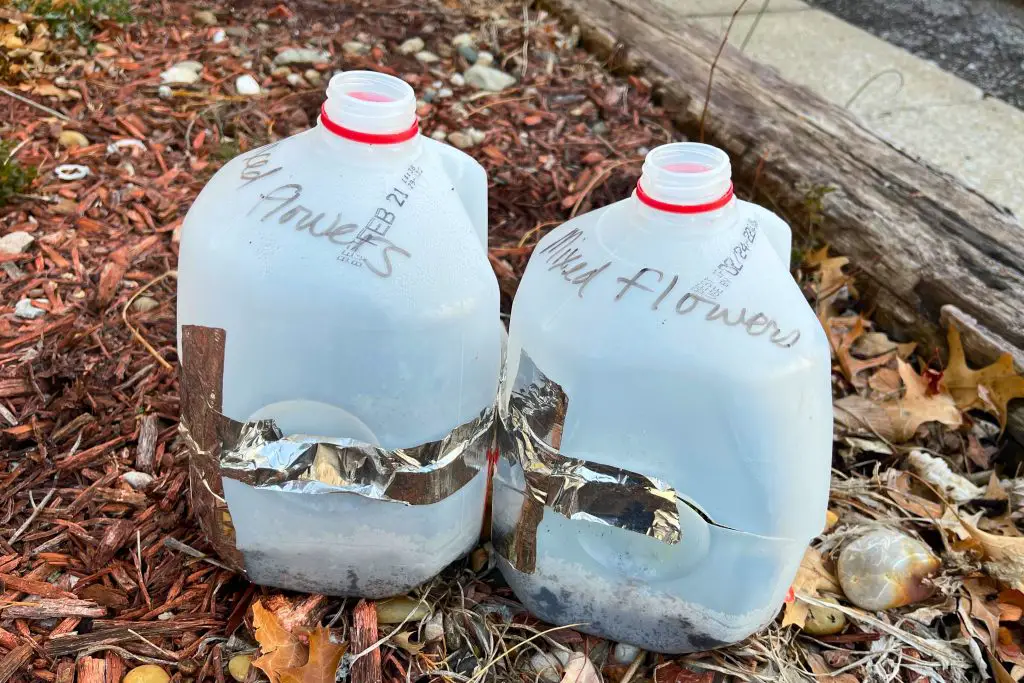
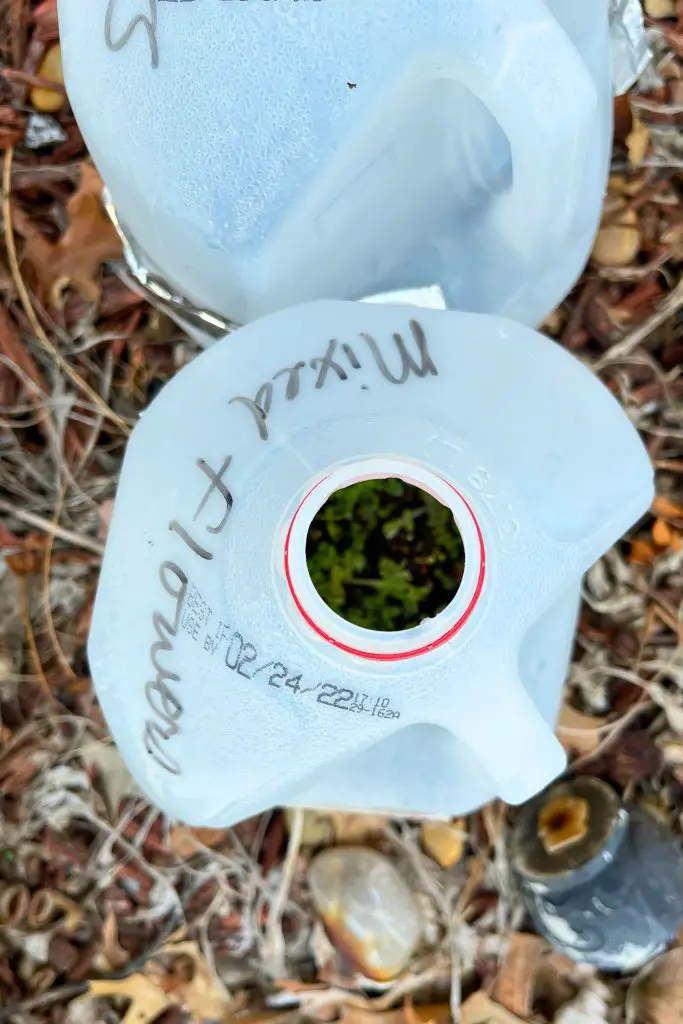
One way to do that is to plant your milkweed seeds in plastic milk jugs and set the containers outside for the winter. This process of growing milkweed is called winter sowing.

Just cut the milk jug in half, plant the seeds in soil, then tape the jug back together and place it outside in a sunny area.

Be sure to water your plants periodically, but before long you'll notice new sprouts in your jug! Transplant them into your garden after the last frost date of your area.

How do I care for milkweed plants?

Here are some tips for caring for milkweed plants:

  1. Soil: Milkweed plants prefer well-draining soil, so avoid planting in areas with standing water or heavy clay soils. Adding compost or other organic matter to the soil can improve drainage and provide additional nutrients.
  2. Watering: Milkweed plants prefer regular watering, especially during periods of drought. However, be careful not to overwater, as this can lead to root rot. Water deeply and infrequently to encourage deep root growth. Milkweed grow natively through most of North America, so native varieties may not need much extra watering, but your plants may grow more full if you water them in times of drought.
  3. Sunlight: Most milkweed species prefer full sun to partial shade. Plant in a location that receives at least 6 hours of direct sunlight per day.
  4. Fertilizer: Milkweed plants don't require heavy fertilization, but adding a slow-release fertilizer in the spring can help boost growth.
  5. Pests and diseases: Milkweed plants are relatively pest and disease-resistant, but keep an eye out for aphids, milkweed bugs, and spider mites, which can occasionally infest the plant. Handpicking or spraying with insecticidal soap can help control these pests.
  6. Maintenance: Remove dead or damaged leaves and stems as needed. In the fall, cut back the plant to 2-3 inches above the soil line to promote healthy regrowth the following spring.
  7. Monarch butterflies: If you're planting milkweed to attract monarch butterflies, make sure to leave plenty of space between plants, as monarch caterpillars can quickly strip a milkweed plant of its leaves.

How do I attract monarch butterflies to my milkweed plants?

Plant it and they will come. Butterflies will instinctively find the host plants their caterpillars feed on.

Some butterflies have a strong sense of smell and can detect chemical cues, such as pheromones, emitted by the host plants. Others rely on visual cues and recognize the shape, color, and texture of the leaves and flowers of their host plants. Some use a combination of both methods.

Raising monarchs is one of our very favorite things about having milkweed in our gardens!

Several monarch caterpillars eating milkweed.

Another way to make your butterfly garden more appealing to butterflies is to plant nectar plants alongside your milkweed plants.

Here are 10 nectar plants that are native to Missouri and are great additions to a butterfly garden:

  1. Purple Coneflower (Echinacea purpurea)
  2. Black-eyed Susan (Rudbeckia hirta)
  3. Joe-Pye Weed (Eutrochium spp.)
  4. Butterfly Weed (Asclepias tuberosa)
  5. Ironweed (Vernonia fasciculata)
  6. Bee Balm (Monarda fistulosa)
  7. Blazing Star (Liatris spp.)
  8. New England Aster (Symphyotrichum novae-angliae)
  9. Wild Bergamot (Monarda fistulosa)
  10. Mountain Mint (Pycnanthemum spp.)

These plants not only provide nectar for adult butterflies, but they also provide shelter and food for their caterpillars. Plants native to the area you live in are easier to grow and maintain, and they're great for the environment!

When creating a butterfly garden, keep in mind that butterflies prefer nectar plants planted in large groups of the same plants rather than dispersed randomly. This helps them find and feed on their favorite blooms!

Once a butterfly identifies a host plant, it lays its eggs on the leaves or stems, and the caterpillars hatch and start feeding on the plant. The cycle continues and more butterflies find your plants!

Can I grow milkweed in containers or indoors?

Yes! Milkweed is easy to start from seed indoors and can also be planted in planters. It will continue to grow big and attract monarchs if it's placed outside. Potted milkweed will act more like an annual plant and will die once the weather cools off.

Since it requires a period of cold to go dormant over the winter, keeping milkweed alive indoors year round isn't ideal.

What are some common problems or pests that affect milkweed plants?

While milkweed plants are generally hardy and relatively pest-resistant, there are a few common problems and pests that can affect them. Here are a few examples:

  1. Aphids: Aphids are small, soft-bodied insects that feed on the sap of milkweed plants. They can be particularly problematic for young plants, causing yellowing leaves and stunted growth. Spraying with insecticidal soap or neem oil can help control aphids. You can also order ladybugs from amazon and allow them to feed on the aphids on your plants.
  2. Milkweed bugs: Milkweed bugs are brightly colored insects that feed on the seeds and pods of milkweed plants. They don't usually cause much damage to the plant, but most gardeners consider them a nusance. Handpicking or vacuuming the bugs can help control their populations.
  3. Spider mites: Spider mites are tiny insects that feed on the leaves of milkweed plants, causing yellowing and wilting. They can be hard to see, but may notice the webs they make on the plant. Spraying with a strong jet of water or insecticidal soap can help control spider mites.
  4. Fungal diseases: Milkweed plants can be susceptible to a few different fungal diseases, including powdery mildew and verticillium wilt. These diseases can cause yellowing leaves, wilting, and stunted growth. Fungicides can help control fungal diseases, but prevention is the best strategy. Avoid overcrowding plants, provide good air circulation, and avoid overhead watering.

By keeping an eye out for these common problems and pests, and taking action to control them when necessary, you can help ensure the health and longevity of your milkweed plants.

Are there any concerns or risks associated with growing milkweed, such as toxicity or invasiveness?

Some species of milkweed can be invasive. Research the native milkweed in your area before planting. If you choose an invasive species in your area, it will be hard to contain and will likely quickly outgrow its designated area, and may make it difficult for other surrounding native plants to survive.

The sap in milkweed leaves is toxic and can be harmful if you get it in your eyes or ingest it. Don't touch your face or eyes while tending to milkweed plants and be sure to wash your hands immediately after.

5 more interesting facts about milkweed:

  1. Milkweed plants produce a toxic sap that can be harmful to humans and animals if ingested, but it also serves as a defense mechanism against predators.
  2. Milkweed flowers are known for their unique structure, with a complex system of petals and a central structure called the corona that contains nectar.
  3. Milkweed seeds are contained in pods that split open when ripe, releasing hundreds of seeds with silky hairs that help them disperse in the wind.
  4. The fibers from milkweed seeds were used by Native Americans to make cordage and fabric.
  5. Milkweed has a variety of medicinal uses, and various parts of the plant have been used to treat ailments such as warts, coughs, and asthma.

Butterfly Terminology: A Comprehensive Glossary for Butterfly Enthusiasts

05/10/2023

Learning to raise butterflies is such a fun process, but there can be a learning curve with all the butterfly terminology. I've compiled a comprehensive glossary for butterfly enthusiasts to help you decipher what commonly used phrases mean!

Think of something that would be useful for new pollinator gardeners or butterfly enthusiasts to know? Let me know in the comments and I'll be happy to add to our glossary!

Adult: The final stage of a butterfly's life cycle, when it has fully developed wings and reproductive organs.

Antennae: The two long, thin sensory organs on the head of a butterfly that help it to sense smells and navigate its environment.

Basking: The behavior of a butterfly where it spreads its wings and exposes its body to the sun in order to warm up.

Butterflies: The common name for a group of insects in the order Lepidoptera that have wings covered in scales.

Chrysalis: The pupal stage of a butterfly's life cycle. The caterpillar transforms into a pupa inside a protective casing called a chrysalis, where it undergoes metamorphosis into an adult butterfly.

Cocoon: The protective casing spun by moth caterpillars during the pupal stage. Unlike butterflies, moths spin cocoons around themselves before entering the pupal stage.

Complete metamorphosis: A type of insect development that involves four distinct stages: egg, larva, pupa, and adult. Butterflies undergo complete metamorphosis.

Diapause: A period of dormancy or inactivity in a butterfly's life cycle, often triggered by seasonal changes or adverse environmental conditions.

Eclosion: The emergence of an adult butterfly from its pupal casing.

Egg: The first stage of a butterfly's life cycle, when a female butterfly lays an egg on a host plant.

Frass: The waste material produced by a caterpillar as it eats.

Host Plant: The plant species on which a butterfly lays its eggs, and on which the caterpillar feeds.

Instar: The stage between two molts of a caterpillar. Caterpillars typically go through five or six instars before they pupate.

Larva: The caterpillar stage of a butterfly's life cycle. Larvae are often referred to as caterpillars and are the only stage of a butterfly's life where they can eat.

Molt: The process of shedding its skin that a caterpillar goes through in order to grow larger.

Nectar: A sweet, sugary liquid that butterflies feed on. Nectar is produced by flowers to attract pollinators like butterflies.

Pheromones: Chemical signals that butterflies use to communicate with each other, particularly for mating.

Proboscis: The long, tubular mouthpart that butterflies use to suck up nectar and other liquids.

Puddling: The behavior of a butterfly where it lands on moist ground and drinks mineral-rich water.

Pupa: The developmental stage between the larva and adult stages, during which the caterpillar transforms into a butterfly or moth.

Scales: The tiny, overlapping plates that cover a butterfly's wings and give them their color and pattern.

Sphragis: A plug of dried mucus that male butterflies use to seal the female's reproductive tract after mating to prevent other males from fertilizing her eggs.

Spiracles: The small openings along the sides of a caterpillar's body that allow it to breathe.

Thorax: The middle segment of a butterfly's body, to which its wings and legs are attached. The thorax contains the butterfly's flight muscles.

Join our newsletter!

Stay up to date with all things Rooted Wings Co! 

Thank you!

You have successfully joined our subscriber list.

Understanding this butterfly terminology will help you further understand the lifecycle and lifestyle of all your favorite butterflies!

Glossary of Butterfly Terminology

10 Interesting Facts About Butterflies

04/29/2023

Butterflies are some of the most beautiful and fascinating animals that exist. Since we started raising them inside, our entire family has become obsessed with butterflies and all the fun facts about them. Here are 10 interesting facts about butterflies you probably haven't heard about!

  1. Butterflies are insects in the order Lepidoptera, which means "scale-winged."
    Their wings are made up of thousands of tiny scales that give them their vivid colors and patterns.
  2. The largest butterfly in the world is the Queen Alexandra's Birdwing.
    It can have a wingspan of up to 12 inches (30 cm).
  3. Butterflies taste with their feet!
    They have chemoreceptors on their tarsi (the end of their legs) that help them taste the plants they land on.
  4. Some butterflies like the monarch migrate thousands of miles each year.
    Monarchs travel from Mexico to Canada and back again, and are found everywhere along the way. The journey can take up to four generations to complete.
  5. Butterflies wings are connected by a hinge.
    This allows them to control each wing separately so they have more control when flying.
  6. Butterflies only live 2-4 weeks on average.
    However, some butterflies live 6 months-1 year.
  7. Butterflies can see in color!
    They can also see ultravoiolet light, which is not visible to humans.
  8. The scales on a butterfly's wings serve another purpose besides creating vibrant prints and patterns.
    They also help regulate the butterfly's body temperature and protect it from predators.
  9. Male butterflies have a special structure called a "clasper" that they use to hold onto the female during mating.
  10. Butterflies are important pollinators and help to fertilize plants by transferring pollen from one flower to another.
    Learn how to start a butterfly garden and raise butterflies inside to help promote a healthy butterfly population!
  11. Bonus: Butterfly caterpillars pupate into a chrysalis while moth caterpillars make cocoons.
    They aren't the same! Butterfly caterpillars shed a final layer of skin and harden into a protective casing where they undergo metamorphosis and moths spin a cocoon around themselves.

Want to learn more about butterflies and butterfly gardening? Sign up for my newsletter!

Sign up now!

Stay up to date with all the latest at Rooted Wings Co.

Thank you!

You have successfully joined our subscriber list.

.

Save this post or share it with a friend by pinning it to Pinterest!

How to Grow a Lemon Tree From Lemon Seeds

04/28/2023

Lemon trees, host plant for the giant swallowtail, are a fun addition to a butterfly garden and can easily be grown in pots. With a little patience, you can learn how to grow a lemon tree from lemons on your own!

How to grow a lemon tree from lemon seeds

Growing lemon trees from lemons is such a fun planting project. And a great lesson in germination. This is a project any gardener will appreciate, but it's a particularly fun experiment with kids! It's super simple to grow several lemon tree plants from one lemon, and you can use a normal lemon you find at any grocery store!

Which butterflies lay eggs on lemon trees?

Lemon trees and other citrus plants are one of the giant swallowtail butterfly's host plants. The larvae are often called lemon tree caterpillars or California orangedogs.

Giant swallowtail butterflies are the largest swallowtail species in the United States with a wingspan of up to 6 inches. You'll also find giant swallowtail eggs and caterpillars on all citrus trees, wild lime, common rue, northern prickly ash, Hercules club and hoptree.

Giant Swallowtail on a flower

How to grow lemon trees from seeds

If you want to see actual lemons on your lemon trees, it may take several years. But don't worry, lemons aren't necessary to attract giant swallowtails!

Lemon trees are self-pollinating, so you won't need multiple trees to produce fruit, but they mostly rely on insects to do the pollinating. For this reason, indoor lemon trees aren't likely to produce fruit.

Join our newsletter!

Stay up to date with all things Rooted Wings Co! 

Thank you!

You have successfully joined our subscriber list.

Lemon trees do make great indoor trees during the winter months (or all year round if you aren't trying to attract butterflies). They can definitely be a nice addition to your home decor. With several lemon seeds in each lemon, you'll have enough to start indoor and outdoor trees if you like.

Supplies for growing a lemon tree from lemon seeds:

  • Lemons (1 or 2 is enough - you'll find plenty of seeds!)
  • Sandwich bag
  • Paper Towels
  • Spray bottle with water (optional)
  • Water bottles or other small planters to start your seeds
  • Soil

How to harvest the lemon seeds:

Cut your lemons into quarters and gently remove the seeds. One or two lemons will provide more than enough seeds. This part of the process will be a little messy and the seeds will be slippery, so you may want to do it outside or on a towel.

Once all the seeds are removed, rinse the seeds then peel off the outer layer of skin. This will allow them to germinate more easily in the next step. Not all the seeds will germinate, so make sure you collect several.

It may take a little practice to get them peeled. I found it easiest to start at the tip of the seed and pry the white skin apart there with my finger nails, then peel it off.

Use the paper towel method to germinate the lemon seeds:

Next spread out the seeds on a paper towel and lightly spray them with water. Gently fold the paper towel a few times and spray it again to ensure the entire thing is wet.

Place the paper towel wrapped seeds inside a sandwich bag and seal it. Store it in a dark, warm spot and wait. I put mine on top of my countertop microwave. Just avoid storing your seeds anywhere cold or drafty.

Plant the germinated lemon seeds:

Check on your seeds after 7-14 days. Gently unwrap the moist paper towel. If you see roots sprouting from the seeds, they're ready to plant!

How to grow a lemon tree from lemon seeds: Lemon tree seeds planted in recycled water bottle

An easy way to plant the seeds is to use recycled water bottles. Cut the top of the water bottle about ¾ of the way down and use scissors to poke holes in the bottom for drainage. Alternatively you can buy small plastic nursery pots, but the water bottles work perfectly fine!

Fill your makeshift planters with soil and place the seeds about an inch deep into the soil. Gently pat soil down on top of the seeds. I originally planted a couple seeds in each of my water bottle planters, so you can do that or just plant one per bottle.

How to care for a lemon tree

Keep your soil moist for the first few weeks and place your seeds near a window with filtered light. After a few weeks, you'll see your lemon tree plant poking through the soil at last.

Lemon tree sprouting from germinated seed
How to grow a lemon tree from lemon seeds

As your lemon tree grows, it will be happier in a full sun spot. Gradually move your tree to a sunnier location as it grows.

Lemon trees are tropical plants that love a lot of sunlight and moisture, so also be sure to keep the soil moist as it grows, never letting it dry out completely.

Grow a Lemon Tree From Seeds

How to Create a Container Butterfly Garden

04/06/2023

Container gardens are a great alternative to planted gardens for a variety of reasons. Whether you don't have the yard space or just want the easier maintenance, you can easily create a container butterfly garden in planters.

how to create a container butterfly garden - how to create a potted butterfly garden

While it may not seem like it initially, plants that make up the best butterfly gardens can also thrive as potted plants. From host plants to nectar plants, almost anything you plant in a normal garden can be potted. This is a great option if you only have a balcony to work with or if you don't want to spend your summer pulling weeds.

With the right plants, you can create a beautiful container garden that attracts pollinators like butterflies, bees and other pollinating insects all season long.

One of our favorite things about butterfly gardening is raising butterflies inside. Learn how to raise different butterflies with these guides:

How to Raise Monarch Butterflies
How to Raise Swallowtail Butterflies
How to Raise Spicebush Swallowtails

1. Use planters of varying heights and sizes.

Before you start planting, collect planters and pots of varying heights and sizes. You can make these as matchy or eccentric as you like! Different shapes and sizes add visual interest, but of course, the many different flowers and plants you use will also add to the design.

Make sure your planters have a drainage hole so you don't drown your plants when watering or when there's a rain storm.

Here are some fun container garden planters you could use:

2. Place your container butterfly garden in the sun.

Choosing the right location for your butterfly garden makes all the difference. Most butterfly garden plants prefer full sun and will grow best in those conditions. Making sure your container garden gets at least 6 hours of full sun each day will produce the best results. Having the proper lighting conditions will help your plants grow fuller and brighter and give you the stunning garden you're hoping to grow!

Join our newsletter!

Stay up to date with all things Rooted Wings Co! 

Thank you!

You have successfully joined our subscriber list.

3. Plant host plants.

One of the most important parts of a butterfly garden is the host plants. These are the plants butterflies lay their eggs on. Host plants ensure butterflies hang around and come back to lay their eggs, and after a few weeks produce new butterflies as the caterpillars grow and pupate.

how to create a container butterfly garden - potted milkweed

To attract the most butterflies, research the butterflies in your area and plant host plants that attract them. Milkweed is the only host plant that monarchs lay eggs on, but there are several types depending on where you live. Since you're planting them in containers, it doesn't matter which kind you use. Black swallowtails have several host plants like parsley, dill, fennel and other plants in the carrot family. It can be fun to plant a variety and see which ones your butterflies prefer!

black swallowtails on potted host plant

Add more variety and height to your garden by planting lemon trees for giant swallowtails and pawpaw trees for zebra swallowtails. I've successfully kept a small pawpaw tree alive in a container the last 3 years. It's probably time to plant that one in the ground, but small trees aren't out of the question for container gardens!

Remember, caterpillars eat A LOT. So the more host plants you can add to your container garden, the better.

4. Plant nectar plants

Along with host plants, your butterfly garden also needs nectar plants. These will attract butterflies and other pollinators to your garden. Native plants tend to be the best plants for pollinators. Some common native plants in the midwest include coneflowers, zinnias, butterfly weed, bee balm, wild blue indigo, Joe Pye weed, new england astars, and so many more.

monarch butterfly on cone flower

Google the native plants in your area for a more complete list.

Also feel free to mix in annuals even if they're not native. The more colorful the better - this will attract more butterflies to your container garden.

One thing about a container garden is that most of your plants will act more like annuals even if they're native to your area. Trees and larger plants may survive inside over the winter, but most of your plants will die at the end of the season. But don't worry - you can harvest the seeds they put out in the fall and use those to start new plants the next year!

5. Plant bright colored plants

container butterfly garden
via The Garden Diaries

There are specific types of nectar plants that attract butterflies more than others. Butterflies are particularly attracted to red, yellow, orange, pink and purple blooms with short flower tubes.

6. Don't use mixed seed, plant large groups of the same plant.

Potted butterfly garden
via Butterfly Lady

Since butterflies are attracted to certain colors, it's recommended that you plant large clusters of the same plant so they can be found by pollinators more easily. You can still combine more than one plant in each planter, just be sure each plant has its own space. Avoid alternating plants or using mixed wildflower seeds. Your pollinators will appreciate being able to find large bunches of each plant you add to your container garden.

7. Make sure not to use any pesticides near your container butterfly garden.

Spraying your yard for mosquitos or other insects will inevitably also rid your space of butterflies, eggs and larva. One year we sprayed our yard and asked them to avoid the butterfly area, but it must have drifted over. That summer we got several eggs on our milkweed, but the caterpillars didn't survive after hatching. Unfortunately, the chemicals that take care of annoying pests also get rid of beneficial ones. It's best to keep any chemicals away from your butterfly and pollinator gardens.

Follow these tips and you're sure to have a container garden that you and your local pollinators will enjoy all season long!

create a container butterfly garden

Free Spring Nature Scavenger Hunt Printable

03/21/2023

As winter bows out and spring steps onto the stage, the world reemerges with signs of new life. Capturing the essence of this new season, a Kids Spring Nature Scavenger Hunt is a delightful way to engage children with the wonders of nature.

This Kids Spring Nature Scavenger Hunt Printable can turn a simple outdoor excursion into a joyful adventure filled with curiosity and discovery.

This Kids Spring Nature Scavenger Hunt Printable can turn a simple outdoor excursion into a joyful adventure filled with curiosity and discovery.

The Scavenger Hunt Checklist:

  1. Flower: Discover the first blooms of spring, whether they're in a garden, a park, or a meadow.
  2. Grass: Find a patch of fresh green grass, a sign that nature is waking up from its winter slumber.
  3. Leaf: Spot a budding leaf on a tree or a fresh one on the ground, showcasing the renewal of nature.
  4. Rabbit: Keep an eye out for a playful rabbit hopping around, enjoying the abundance of spring.
  5. Sun: Feel the warmth of the sun on your face, a reminder of the longer and brighter days ahead.
  6. Snail: Search for a snail, slowly making its way along a surface, adding a touch of curiosity to the scavenger hunt.
  7. Bee: Observe a busy bee buzzing around flowers, collecting nectar and pollinating the blossoms.
  8. Ant: Witness the industrious work of ants, carrying tiny loads and contributing to the ecosystem.
  9. Bird: Listen for the sweet melodies of birds or catch a glimpse of them building nests or perched on branches.

Why a Spring Scavenger Hunt?

A spring scavenger hunt allows children to actively engage with the signs of spring, celebrating the season's arrival.

The scavenger hunt serves as an educational tool, introducing kids to various elements of spring, from plants to animals and insects.

This activity transforms a walk in the neighborhood, a playtime session in the yard, or a visit to the park into an exciting adventure of discovery.

By actively seeking items on the checklist, children develop a deeper appreciation for the natural world and its seasonal cycles.

Encounters with birds, rabbits, snails, and insects offer kids a chance to observe and connect with the diverse wildlife that emerges in spring.

This Kids Spring Nature Scavenger Hunt Printable can turn a simple outdoor excursion into a joyful adventure filled with curiosity and discovery.

How to Use the Printable:

  1. Save the PDF: Click the link to access the Kids Spring Nature Scavenger Hunt Printable. Right-click on the image or link, and choose "Save As" to download the PDF file to your device. Or sign up below to download a high-quality print version.
  2. Print the Checklist: Open the PDF file using a PDF reader or your preferred image viewer. Print the checklist on standard letter-sized paper or cardstock for durability.
  3. Ready, Set, Explore: Equip each participant with a printed checklist and a pen or pencil. Explain the items on the list and set out on your spring scavenger hunt adventure.
  4. Check Off Items: As kids find each item on the list, they can check it off or mark it with a pencil. Encourage them to observe and appreciate the details of each spring discovery.
  5. Celebrate Spring Success: Once all items are found, gather together to celebrate the completion of the scavenger hunt. Consider a small reward or acknowledgment for the participants.

Download the FREE Spring Nature Scavenger Hunt

Thank you!

Download Now!

Note on Usage:

This Kids Spring Nature Scavenger Hunt Printable is designed for personal use only. It's a tool to bring joy, exploration, and connection with spring nature to individuals, families, or classrooms. Please refrain from distributing or using it for commercial purposes without proper authorization.

A spring nature scavenger hunt is more than a checklist; it's an invitation for kids to embrace the beauty and renewal of the season. Download the printable, step outside into the crisp spring air, and let the adventure begin. Through this activity, children can foster a love for nature, develop their observational skills, and create memories filled with the excitement of spring's arrival. Happy spring exploring!

More Sprint Nature Scavenger Hunt Ideas:

Certainly! Here are 50 more spring scavenger hunt ideas to add variety and excitement to your outdoor adventure:

  1. Tulip Bloom: Find a tulip in full bloom, showcasing its vibrant petals.
  2. Fresh Herb: Identify a fragrant herb, like mint, basil, or rosemary.
  3. Cherry Blossom Petal: Spot a petal from a cherry blossom tree, a symbol of spring's beauty.
  4. Clover Patch: Locate a patch of clover, perhaps with a lucky four-leaf clover hiding among the leaves.
  5. Dragonfly: Observe a dragonfly gracefully darting through the air.
  6. Frog: Listen for the croak of a frog or search for one near a pond.
  7. Wildflower Bouquet: Create a small bouquet with various wildflowers.
  8. Robins' Nest: Spot a nest built by robins, often found in trees or bushes.
  9. Puddle Reflection: Find a puddle and observe the reflection of the surroundings.
  10. Hummingbird: Catch a glimpse of a hummingbird, attracted to colorful flowers.
  11. Chickadee: Identify the distinctive call of a chickadee or find one perched on a branch.
  12. Blossoming Bush: Discover a bush covered in blossoms, such as lilacs or forsythia.
  13. Rainbow: Look for a rainbow in the sky after a spring shower.
  14. Crocus Flower: Find a crocus flower, often one of the first to bloom in spring.
  15. Woodpecker: Listen for the rhythmic tapping of a woodpecker or spot one on a tree trunk.
  16. Caterpillar Crawling: Observe a caterpillar making its way across a surface.
  17. Violet: Discover a patch of violets, small but delightful spring flowers.
  18. Worm: Find a worm, a sign of the earth awakening in spring.
  19. Kite Flying: Spot a colorful kite soaring in the sky.
  20. Beehive: Observe a beehive, either in a tree or a designated beekeeping area.
  21. Magnolia Blossom: Find a magnolia tree with its large, elegant blossoms.
  22. Scented Blossom: Identify a flower with a distinctive and pleasant scent.
  23. Sprouting Seed: Discover a seed that has sprouted, indicating new growth.
  24. New Butterfly: Spot a butterfly that has recently emerged from its chrysalis.
  25. Robin's Egg: If you're lucky, find a fallen robin's eggshell.
  26. Fresh Grass Scent: Inhale the invigorating scent of freshly cut grass.
  27. Honeybee: Watch a honeybee collecting nectar from flowers.
  28. Wild Garlic: Find wild garlic growing in a shady area.
  29. Spider Web with Dew: Discover a spider web adorned with morning dew.
  30. Feather Collection: Gather a variety of feathers from different birds.
  31. Moss-Covered Rock: Spot a rock covered in vibrant green moss.
  32. Pollen-Covered Bee: Observe a bee covered in pollen from flower visits.
  33. Baby Animals: Keep an eye out for baby animals like ducklings, lambs, or fawns.
  34. Early Morning Sunrise: Witness the beauty of the sunrise, a promise of a new day.
  35. Wet Petal: Find a flower petal with dew or raindrops on it.
  36. Daisy Chain: Create a chain using daisies or other flowers.
  37. Nesting Material: Discover materials birds use for nesting, such as twigs or feathers.
  38. Ladybug on a Leaf: Spot a ladybug resting on a leaf.
  39. Pollen-Covered Butterfly: Observe a butterfly covered in pollen from its flower visits.
  40. Dandelion Seed Head: Find a dandelion with its seeds ready to disperse in the wind.
  41. Chirping Crickets: Listen for the chirping sound of crickets in the evening.
  42. Blossoming Apple Tree: Discover an apple tree in full bloom.
  43. Spring-Flowering Bulb: Find a bulb flower like a daffodil or hyacinth.
  44. Muddy Puddle: Find a puddle with evidence of playful activity, like footprints or splashes.
  45. Goslings: Spot a family of baby geese, known as goslings.
  46. Honeysuckle Vine: Discover a honeysuckle vine with fragrant flowers.
  47. Pollen-Covered Bumblebee: Observe a bumblebee covered in pollen from its flower visits.
  48. Sprouting Vegetable Plant: Find a vegetable plant just beginning to sprout.
  49. Reflective Pond: Discover a pond reflecting the surrounding landscape.
  50. Snail Trail: Spot the trail left behind by a snail on a surface.

Feel free to mix and match these ideas based on the location and preferences of your spring scavenger hunt. Happy hunting!

Raising Spicebush Swallowtail Caterpillars

09/02/2022

Once you start raising caterpillars and butterflies, you'll want to start collecting them all.

In this post I share about raising spicebush swallowtail caterpillars from egg to butterfly. This unique-looking caterpillar turns into a really beautiful spicebush swallowtail butterfly!

Large spicebush swallowtail butterfly on spicebush leaf.

Raising caterpillars is actually quite easy - your job is to provide a clean living environment full of their favorite food so they can grow free from the predators in the wild.

And then release them back into the wild to produce more eggs, caterpillars and butterflies.

However, each species of butterfly is a little different. Understanding their unique quirks can demystify some of the puzzling behavior you may observe from your caterpillars.

The spicebush swallowtail butterfly, or Papilio troilus Linnaeus, is one of hundreds of species of swallowtail butterflies. There are only around 31 species found in North America.

The spicebush swallowtail butterfly is known for its unique blue-green coloring and is most commonly found in the eastern half of the United States.

Life cycle of a spicebush swallowtail butterfly

Understanding the life cycle of each butterfly is the first step to learning how to care for them. There are four stages in the life cycle of a butterfly: egg, caterpillar (larvae), chrysalis (pupa) and butterfly.

1. First, a female butterfly lays an egg on the host plant for that specific species. The spicebush swallowtail is most commonly found in spicebush plants. (We'll cover their other host plants later in this post.)

2. Within 4 to 10 days of being laid, the caterpillar will hatch from the egg, typically eat the shell of its egg, and then begin eating its host plant.

3. A caterpillar will shed its skin 4 times, each time entering a new growth phase called an instar.

A recently hatched caterpillar is in its first instar, and then after it sheds its skin for the first time enters its second instar and so on.

The spicebush swallowtail caterpillar will continue to eat and grow for 3-4 weeks until it sheds its skin a fifth and final time to pupate into its chrysalis.

Before shedding its skin a final time, the caterpillar will search for the perfect spot. It often wanders away from its food to create a silk pad to attach itself to its surrounding.

Then it builds a silk thread called a saddle to hang in an upside down J. After hanging this way for 12-24 hours, it will pupate and enter the pupa stage.

Join our newsletter!

Stay up to date with all things Rooted Wings Co! 

Thank you!

You have successfully joined our subscriber list.

4. The caterpillar will remain in its chrysalis for 10-20 days before eclosing as a butterfly.

It will emerge from the chrysalis with wet, wrinkled wings that will need to dry out for a couple of hours before being released.

During this time, it expands its wings by pumping fluid from its abdomen. You may notice that the fresh butterfly's abdomen is larger when it first ecloses and then gets smaller as its wings expand.

Freshly eclosed spicebush swallowtail butterfly resting on a hand.

What do spicebush swallowtail caterpillars eat?

As you might have determined by the name, spicebush swallowtail caterpillars can be found on spicebush plants.

You may also find them on tulip trees, sassafras, camphor trees, redbay and swampbay.

How to find spicebush swallowtails

The easiest way to find a spicebush swallowtail caterpillar is to search the leaves of its host plant.

Raising caterpillars inside is impressive to watch, but it's also great for waning butterfly populations. Caterpillars have many predators and have a much lower survival rate outside in the elements than when raised inside.

The best time to find a caterpillar is in the egg stage.

Caterpillars are sometimes infected with disease or parasites early on in their lifecycles, so you have a greater chance of raising a healthy butterfly from the egg stage.

Female spicebush swallowtails most commonly lay single eggs on the top of the leaves. However, you may also find them on the bottom of the leaf.

(Butterflies and caterpillars do what they want. We can make our best guesses about their behavior, but they might not listen.)

Eggs are white/yellowish and sphere shaped until the caterpillars are getting ready to hatch, at which point they will appear darker as the egg turns clear and you can actually see the caterpillar inside.

What does a spicebush caterpillar look like?

Early instar caterpillars are darker in color, resembling bird droppings.

As they grow they turn green with two snakelike eye designs on their backs. They may look menacing, but they are harmless.

I will work on adding some more detailed photos of the different stages, but unfortunately, I will likely have to wait until next summer for another opportunity.

You may also find them folded in a spicebush leaf as they like to build a nest and wrap the edge of the leaf around them for protection. They use leaves to protect themselves during the day and feed more at night.

They typically turn yellow or orange right before finding a spot to pupate into their chrysalis.

Spicebush swallowtail caterpillar has turned yellow and is hanging in its J off a spicebush leaf getting ready to pupate.
Spicebush swallowtail caterpillar recently wrapped itself in a spicebush leaf and pupated into its chrysalis.

How to attract spicebush swallowtail butterflies

In order to collect eggs and caterpillars, you first need to attract the adult butterflies that will eventually lay eggs.

The easiest way to do this is to plant their host plants along with nectar plants so the butterflies will have everything they need in one spot!

This is our butterfly garden that currently has host plants for monarchs and black swallowtails, and next year we'll add pawpaw trees for zebra swallowtails and a spicebush for spicebush swallowtails.

Two kids releasing a monarch butterfly in front of butterfly garden with milkweed, cone flowers, zinnias and fennel.

Conveniently, some of the best nectar plants are host plants for other butterflies, like milkweed which is the host plant for monarch butterflies.

It is one of the spicebush swallowtails favorite nectar plants. Other fan favorites include zinnias, lantana, cone flowers, phlox, black-eyed susan and many more.

Go a step further by researching native plants in your zone to create a native butterfly haven. Great for butterflies and the environment!

My butterfly garden tends to be a bit more messy and whimsical, but you can create yours to be as wild or prim and proper as you like. If you don't have host plants in your garden, you can always go walk a wooded trail near a creek where they naturally grow. We've had good luck finding some of our favorite host plants on walking trails.

Even if you don't have space to plant a large garden, you can create a container pollinator garden.

Many host plants thrive in a container, where they may be annuals instead of perennials. This is a great solution if you don't have the space to build a large garden.

Don't use pesticides or insecticides on your butterfly garden

Be sure not to treat your garden with anything that would kill insects, or you won't find any surviving caterpillars in your garden.

We sprayed our yard for mosquitos one summer and butterflies still laid eggs, but they died within the first day of hatching. I definitely felt like a terrible caterpillar mom.

How to raise spicebush swallowtail caterpillars inside

There are a few tips that will make keeping your caterpillars inside a breeze. Here are some things you may want to purchase to take the best care of your new pets.

  • Tupperware containers are easiest for when they are little.
  • Butterfly enclosures are great for larger caterpillars so they have a perfect place to hang before pupating and plenty of room to dry their wet wings after eclosing.
Spicebush swallowtail butterfly inside black mesh butterfly enclosure.

When caterpillars are young, we typically keep them in tupperware.

They are easier to keep track of and to keep clean than the larger pop up butterfly enclosures.

Caterpillars poop A LOT so it's important to keep their frass (the technical name) cleaned out.

When the caterpillars are small, you can probably get by with cleaning the containers daily, but as they grow, you may need to clean them twice a day.

You can keep several caterpillars in the same container. Just keep an eye on them from time to time. If they seem crowded, divide them up a bit.

You want to make sure you have enough food in each container to get the caterpillars through the day. They may eat more than you expect.

When the caterpillars reach the third or fourth instar (by the second week usually), it's safe to transfer them to a popup butterfly enclosure.

This allows them to find a spot to pupate when they're ready and eclose in a space ample enough to dry out their wings. You can line the bottom of the enclosure with paper towels to make clean-up easier.

How to feed spicebush swallowtail caterpillars inside

One way to keep a steady supply of leaves in the enclosure is to place an entire potted spicebush plant inside if you have one small enough.

Or cut an entire branch and place it in a cup of water with a lid or saran wrap covering the opening. You can place the branch through the straw opening in the lid. As long as your caterpillars aren't itty bitty, they shouldn't end up in the water.

If that doesn't work for you, just bring in fresh leaves every day. Gently rinse them in your sink and dry off any excess moisture before giving them to your caterpillars.

You'll have to replace them much more often than leaves on a stem, but your caterpillars will be happy either way.

How to release spicebush swallowtail butterflies

After you've patiently (and maybe anxiously - the suspense!) waited for your caterpillar to make it through the life cycle, it's exciting to finally see the fruits of your labor with a freshly eclosed butterfly.

When it's almost time, the chrysalis appears darker as it actually begins to turn a transparent color. Eventually, you'll be able to see the pattern of the wings showing through. That's how you know! It's hard to catch them eclosing, but amazing to see if you do catch it.

If your butterfly does not eclose after a few weeks, it may still be alive but has decided to overwinter in its chrysalis.

This happens more frequently toward the end of summer when the weather begins to drop. The chrysalis will stay green (or the original color it pupated to) and firm-the signs of a healthy chrysalis.

You can actually place your chrysalis in the refrigerator to mimic the winter season and bring it back out in the spring as the weather warms back up. It still may take a few weeks to eclose, so patience is your friend.

Occasionally a pupa does die in the chrysalis stage. Casualties are a hazard of butterfly raising, so don't be too hard on yourself.

Remember that its chances of survival outside were much, much lower. The chrysalis will turn a brown color (not as dark as when the butterfly is getting ready to emerge) and will eventually get mushy. You'll be able to tell the difference when the time comes.

Spicebush swallowtail butterfly resting on flower on wooden deck.

After your butterfly ecloses, it will need a few hours to dry out its wings.

Don't mess with the butterfly or the enclosure during this time. A fall can permanently damage the wings if they are still wet and the butterfly won't be able to fly.

After 2-3 hours, when your butterfly moves around the enclosure on its own, you can release it back into the wild and keep your fingers crossed that it brings you more eggs soon! This is our favorite part, one my kids have really enjoyed the last few years!

Have you found or raised a spicebush swallowtail? Leave a comment and tell me about your butterfly experiences!

Save this post for later, or share it with friends, by pinning it to Pinterest!

How to Raise Swallowtail Butterflies

04/07/2022

As a follow up to my guide about how to raise monarch butterflies, here is a step-by-step guide about how to raise swallowtail butterflies - from finding the butterfly eggs to raising the caterpillars and releasing the adult butterflies.

We started out raising monarch butterflies, which is probably a pretty typical way to get started. But once you join the butterfly world, it is inevitable that you will want to collect and raise ALL the butterflies you can find. And unlike other types of raising wildlife in captivity, raising butterflies inside your home is actually beneficial for them.

In the wild, the survival rate for butterflies is quite low. Only one or two butterfly eggs out of every 100 laid survives long enough to become a butterfly. Caterpillars have a few defenses, but overall, they're very susceptible to predators, disease, parasites and even the weather. And that's just what nature throws at them. Add in humans and pesticides and insecticides, and it's not easy out there for a caterpillar.

However, raising swallowtail butterflies inside is fun and easier than you might think. You just need a few basic things to get started and a food source, and you'll have everything you need to help boost the butterfly population.

Black swallowtail on leaf.

Types of swallowtails

One of the coolest parts of raising swallowtails is the variety of swallowtail species. There are several different types of swallowtails, and they're all beautiful. Swallowtail butterflies are large butterflies in the family Papilionidae and include more than 550 different species worldwide. Less than 30 species live in North America.

A common characteristic of most swallowtail butterflies is a tail on their hind wings that looks like a swallow bird tail, although not all swallowtail butterflies have them.

There are four general groups of swallowtail butterflies in North America:

  • Black swallowtails
  • Giant swallowtails
  • Tiger swallowtails
  • Pipevine swallowtails

We live in Missouri where we have the following swallowtail butterflies:

  • Pipevine Swallowtail
  • Polydamas Swallowtail
  • Zebra Swallowtail
  • Ozark Swallowtail
  • Black Swallowtail
  • Eastern Tiger Swallowtail
  • Pale Swallowtail
  • Spicebush Swallowtail
  • Palamedes Swallowtail
  • Giant Swallowtail

Google the swallowtails in your area to see which species you can find near you.

Join our newsletter!

Stay up to date with all things Rooted Wings Co! 

Thank you!

You have successfully joined our subscriber list.

What do swallowtail caterpillars eat?

The first step to finding your swallowtail eggs and caterpillars is to identify the host plants they eat. Most caterpillars only feed on one specific kind of host plant. For example, monarchs caterpillars only eat milkweed, although there are several types of milkweed they will feed on.

Swallowtails tend to have a more broad array of plants they will eat, which makes it easy to keep them fed as they eat a lot and grow quickly during their few short weeks as a caterpillar. However, the host plant also depends on the species of swallowtail caterpillar.

Here are the host plants for the most common swallowtail caterpillars in Missouri:

Black Swallowtail caterpillars eat plants from the carrot family like parsley, dill, fennel, and rue, along with common roadside wildflowers like Queen Anne's lace.

Zebra Swallowtail caterpillars' only host plant is the pawpaw tree. You can find pawpaw trees on the bank of a river or creek, and they are also small enough to plant as an ornamental tree in your yard. Zebra swallowtails are some of our favorite butterflies and I have yet to raise one successfully to a butterfly. But I do have a potted pawpaw tree waiting to find its forever home soon.

Giant Swallowtail caterpillars eat plants in the citrus family like orange, grapefruit, kumkuat, etc. They also feed on Hercules' Club, Hop Tree, and Prickly Ash trees. But the easiest way to collect giant swallowtails eggs and caterpillars is on rue, which is also a host plant for the black swallowtail.

Eastern Tiger Swallowtail caterpillars feed on a large variety of host plants, mostly trees like cottonwood, ash, birch, wild black cherry, tulip tree, sweet bay (magnolia), and willow. We also have a potted tulip tree waiting for its forever home. We are addicted.

The host plant for the Spicebush Swallowtail caterpillar is the spicebush, along with sweet bay, sassafras and the tulip tree. Read my guide for raising spicebush swallowtails.

Pipevine Swallowtail caterpillars eat Virginia snakeroot, Dutchman's pipe, and other members of genus Aristolochia (pipevines). 

As you can see, there are plenty of host plant options for your garden to help you attract swallowtails butterflies to lay eggs.

How to find swallowtail caterpillars and eggs

Once you have identified an appropriate host plant for swallowtails, check the leaves for a white-ish yellow-ish sphere. As the caterpillar is closer to hatching out of the egg, it may turn a darker color. While monarch eggs are usually laid on the underside of milkweed leaves, swallowtail eggs can be found on the top or bottom of the leaf depending of the species.

Swallowtail caterpillar egg.

You can also bring small caterpillars inside to raise, however it is recommended you keep larger caterpillars quarantined from the rest of your caterpillar population. Most caterpillar eggs are free of parasites and disease, but caterpillars may not be so lucky. A tip for finding freshly hatched caterpillars is to look for the tiny tracks on the leaves where they have started eating.

Learn more about how to find butterfly eggs.

What to expect: Life cycle of a swallowtail caterpillar

The life cycle of the swallowtail caterpillar varies by species, but they generally follow this outline. There are four phases: egg, larva, pupal and adult - the butterfly. A caterpillar will hatch from its egg about 3-5 days after being laid.

As a caterpillar, the swallowtail eats as much as it can for two to four weeks and sheds its skin several times as it grows. These stages are called instars, and the swallowtail caterpillar will go through five instars before it sheds its skin one final time and pupates into its chrysalis.

When its ready to pupate, the caterpillar will purge itself (a final elimination of liquidy frass) and find the perfect spot to prepare for its chrysalis. Then it will form a silk button to attach to and curl into an upside down J shape while it creates a silk thread called a saddle to wrap around itself. Within the next day or so, it will shed its final skin and harden into a chrysalis.

The pupal stage - when the caterpillar undergoes metamorphosis in its chrysalis - is the stage of the lifecycle that varies the most with different species. Some swallowtails will emerge from their chrysalises (a process called eclosing) as butterflies within 2-3 weeks, and others will take longer, sometimes several months. Unlike monarchs, swallowtails are also able to overwinter in their chrysalises in colder climates and eclose in the spring when the weather is more favorable.

After the butterfly ecloses, it will hang onto its chrysalis for a few hours while its wings dry. Then it can fly off an enjoy life as a butterfly for the next 10-45 days. Black swallowtails, one of the most common species in Missouri, only live an average of 10-12 days as a butterfly.

What you need to raise swallowtail butterflies

Beyond a steady supply of food, there are a few things that make raising butterflies easier.

You'll want some type of container to keep the caterpillars in. We use rubbermaid containers with holes poked in the lids. As long as you keep it well stocked with host plants, most caterpillars won't wander too far unless they are shedding their skin or pupating. But for those reasons, you will want to use the lids. You can reuse the containers by periodically washing them well with bleach water and letting them dry completely before reintroducing eggs or caterpillars.

You'll also need a butterfly enclosure so your butterflies have a safe space to let their wings dry before you release them. If butterfly wings are damaged before they're dry, it can often be fatal for the butterfly. Mostly because it won't be able to fly to find food.

Another thing that is beneficial, though not required, is a watering tube. You can collect stems of the host plant with multiple leaves attached and use this watering tube to keep your leaves fresher longer. This is beneficial when caterpillars are quite big and go through a lot of food in short periods of time.

How to find swallowtail eggs and caterpillars

Look for caterpillars on their host plants. You can most certainly search naturally growing host plants, or plant your own! The Black Swallowtail is an easy one to start with because its host plants are readily available at most garden centers. Parsley, rue, dill and fennel all make great starter plants that attract swallowtail butterflies.

So plant them and they will come! Add some nectar plants to your garden and you'll be even more successful.

Even if you don't have a large garden or yard to plant all the things in, you can still attract and raise butterflies. Container gardening works just as well! Plant those herbs in a planter and set it in a sunny spot, and the swallowtails will find your plants to lay eggs. Check them once or twice a day, and bring in any eggs or small caterpillars that you find!

How to care for swallowtail caterpillars inside

Once you collect your swallowtail eggs, place them in your clean container, and wait for them to hatch. If you watch closely you'll see a tiny caterpillar within a day or two. Replace the leaves as the caterpillar eats them, or as they begin to wither. You'll need to keep a fresh supply of food in the container at all times.

At first your tiny caterpillar will eat slowly, but as he grows he will consume his food much more quickly .You'll be surprised at how much you're feeding him toward the end of the two weeks. Fun fact: you won't know if your caterpillar is male or female until its a butterfly. And some species are difficult to identify.

As your caterpillar eats more, it will also poop more. Caterpillar poop is called frass. You'll want to clean the frass out of the container at least once a day in the beginning, and probably twice a day by the second week.

As long as you provide a clean and well stocked home for your caterpillars, they'll be growing and turning into butterflies in no time! Then you are ready for the most fun part of all, releasing your butterfly back into the wild, where hopefully they'll choose to return to you and lay more eggs!

Not finding any butterflies or caterpillars in your garden?

You might be making one of these 5 mistakes! Subscribe below and I'll send them to your inbox.

Thank you!

Check your inbox!

Save this post for later, or share it with friends by pinning it to Pinterest!

  • « Go to Previous Page
  • Page 1
  • Page 2

Primary Sidebar

Copyright © 2026 Rooted Wings Co on the Brunch Pro Theme